Modeling of pre-sedimentary faults


Hey Everyone,
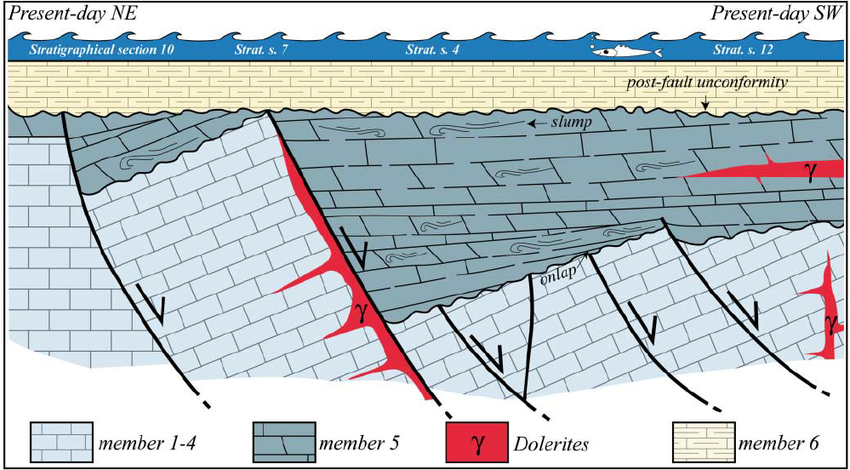
What is the best way to model a fault that does not affect overlying (post-fault) sediments?
Comments
-
Hi Nikolay, my notifications keep going to a folder that is hidden in my outlook, so I miss when people post… Although this might seem counter intuitive, the best way to model a fault that stops against an unconformity above is… to model the unconformity as a fault! It does seem odd, but it works, and the resulting model is correct. There are two methods you can use. If the unconformity is a single lithology code, as in your lovely diagram above, you can just derive the contacts between that unit and everything below. If you have multiple younger units at the unconformity then I have successfully used a strategy where I created a new grouped column where everything above the unconformity was grouped into a single code, as was everything below, and derived the contacts from that. I hope this helps!
2 -
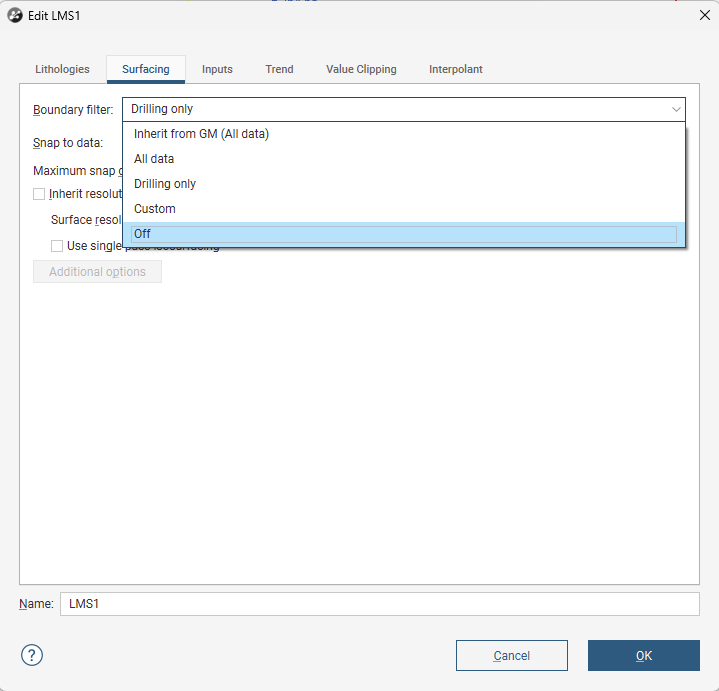
Another method would be to go into the unconformity surface (and any younger surfaces) under Surface Chronology in your GM pre-faulting and, on the Surfacing tab, set the Boundary filter to Off. Doing so will let this surface see across fault blocks:
 0
0 -
@ErikScheel it is an approach, but the challenge is that still projects the faults to surface though, which can be a problem for some downstream users.
0

